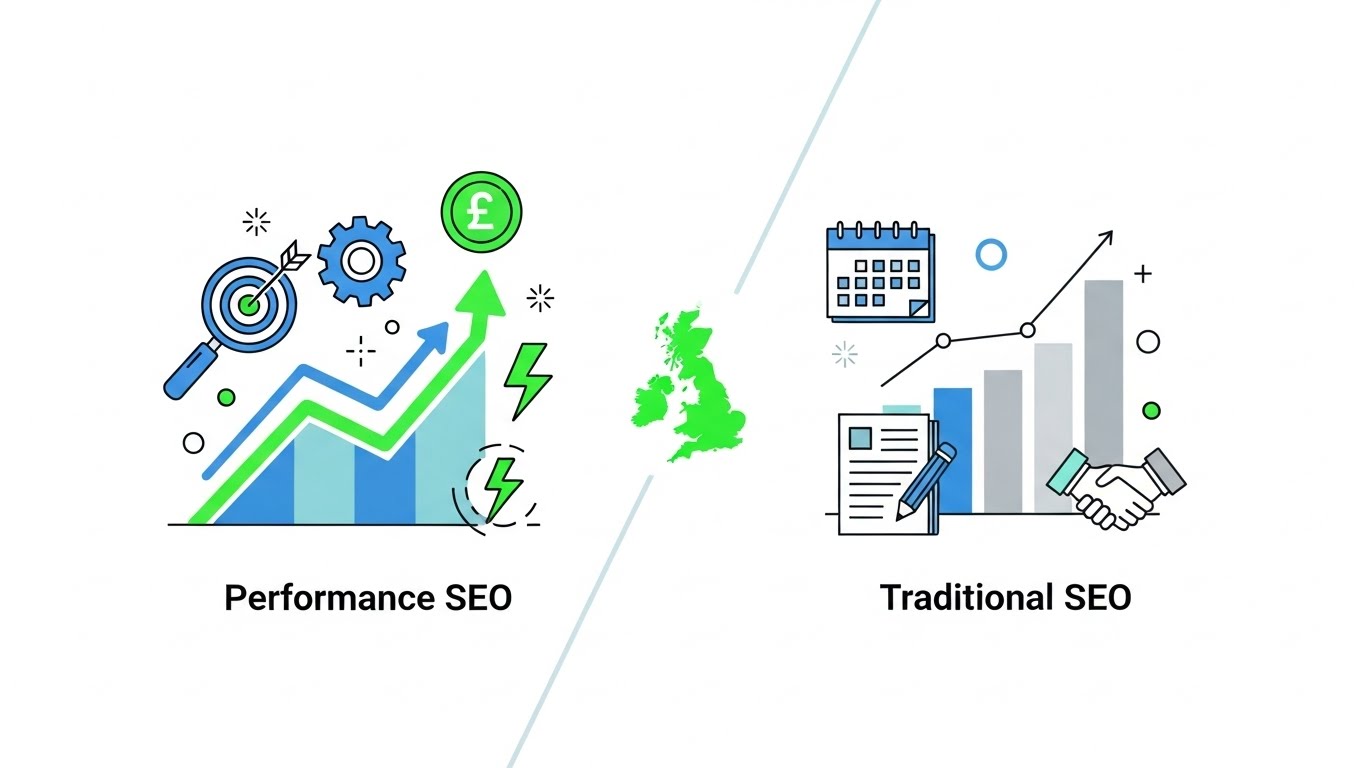
The digital landscape has fundamentally shifted over the past five years, and UK small and medium-sized enterprises face a critical decision when investing in search engine optimization. The traditional approach that dominated the industry for years is now competing with newer, performance-driven methodologies that promise faster results and measurable returns. Understanding the distinction between these two approaches is essential for business owners who want to maximize their marketing investment and achieve sustainable growth in an increasingly competitive online marketplace.
The Fundamental Difference in Approach
Traditional SEO operates on a foundation of best practices developed over two decades of search engine evolution. This methodology focuses on optimizing websites for search visibility through a combination of technical improvements, content development, and authority building. The approach is comprehensive and methodical, addressing every aspect of how search engines discover, crawl, and rank web pages. It emphasizes long-term sustainability, brand building, and organic growth that compounds over time.
Performance SEO, by contrast, takes a more direct and metrics-focused approach. Rather than treating SEO as a general visibility initiative, performance-based strategies concentrate specifically on driving measurable business outcomes such as leads, conversions, and revenue. This model often incorporates real-time data analysis, rapid testing, and continuous optimization cycles designed to improve performance metrics week over week. The philosophy centers on accountability and demonstrable return on investment rather than vanity metrics like rankings or traffic volume.
Understanding the Cost Structure and Investment Models
The financial implications of choosing between these approaches deserve careful consideration. Traditional SEO typically operates on a monthly retainer model, with UK agencies charging between £1,500 and £6,000 monthly for comprehensive services. This investment covers ongoing optimization work, content creation, technical maintenance, and link building activities. The costs remain relatively consistent regardless of whether your business achieves significant results during a particular month.
Performance SEO Services UK often employ different pricing structures that tie costs more directly to outcomes. Some agencies charge based on leads generated, conversions achieved, or revenue influenced by organic search activity. This model theoretically aligns agency incentives with business objectives, though it introduces complexity around attribution and measurement. For SMEs with limited budgets, this outcome-focused pricing can feel more manageable initially, though it may ultimately prove more expensive if performance targets are ambitious.
The Timeline Reality for SMEs
Small and medium-sized enterprises often operate with different timelines than larger corporations. Many SME owners expect to see meaningful results within three to six months, particularly if they’re investing significant resources into digital marketing. Traditional SEO typically requires patience, with most professionals recommending a minimum commitment of six to twelve months before expecting substantial ranking improvements and traffic growth. This extended timeline can feel frustrating for business owners accustomed to faster feedback loops in other areas of their operations.
Performance-based approaches often promise quicker wins by focusing on high-intent keywords, optimizing conversion funnels, and implementing rapid testing cycles. While this can deliver faster initial results, it sometimes comes at the expense of building long-term organic visibility. An SME that achieves quick conversions through performance SEO might find itself dependent on that specific strategy and vulnerable if market conditions change or competition intensifies.
Technical Excellence and Foundation Building
Traditional SEO places significant emphasis on establishing a solid technical foundation. This includes ensuring proper site architecture, implementing structured data markup, optimizing page speed, ensuring mobile responsiveness, and establishing proper crawlability and indexation. These foundational elements take time to implement correctly but create a platform upon which all future optimization efforts build. For SMEs with older websites or technical debt, addressing these issues properly can unlock significant performance improvements across the board.
Performance SEO may deprioritize some foundational work in favor of quick wins. While this approach can deliver faster results, it risks building optimization efforts on unstable ground. An SME that focuses exclusively on performance metrics without addressing underlying technical issues might find that improvements plateau or that algorithm updates disproportionately impact their visibility.
Content Strategy and Long-Term Authority
The content approach differs significantly between these methodologies. Traditional SEO advocates for comprehensive content development that addresses the full customer journey, from awareness through consideration to decision-making. This might involve creating educational blog posts, detailed guides, comparison articles, and resource pages designed to establish expertise and attract organic links. The investment in content is substantial, but the assets created continue generating value indefinitely.
Performance SEO typically concentrates content efforts on high-converting keywords and pages most likely to drive immediate business results. This focused approach can be more efficient in the short term, but it may leave gaps in your content ecosystem that competitors can exploit. SMEs that invest exclusively in performance-focused content might miss opportunities to build brand authority and establish themselves as industry thought leaders.
Link Building and Authority Development
Building domain authority through quality backlinks remains crucial for long-term SEO success. Traditional approaches emphasize earning links through digital PR, guest posting, content partnerships, and relationship building. This process is gradual but creates genuine authority signals that search engines recognize and reward. The links earned through these methods tend to be stable and resistant to algorithm changes.
Performance SEO may employ more aggressive link acquisition strategies focused on quickly improving domain metrics. While this can accelerate authority building, it introduces risk if the links acquired don’t meet current quality standards or if search engines perceive the link profile as unnatural. SMEs should be particularly cautious about link building tactics that prioritize speed over quality, as penalties can be devastating for smaller businesses with limited resources to recover.
Measurement and Reporting Differences
How success is measured reveals fundamental differences in these approaches. Traditional SEO reporting typically includes rankings for target keywords, organic traffic growth, indexed pages, backlink profile improvements, and engagement metrics. These metrics provide a comprehensive view of SEO health but don’t directly connect to business outcomes. SME owners sometimes struggle to justify SEO investment based on these metrics alone.
Performance SEO reporting focuses on business-relevant metrics: leads generated, conversion rates, cost per acquisition, and revenue influenced by organic search. This direct connection to business outcomes makes it easier to justify investment and demonstrate ROI. However, this approach requires sophisticated tracking infrastructure and clear attribution models, which can be challenging for SMEs with limited analytics expertise.
The Hybrid Approach for SME Success
Rather than choosing exclusively between traditional and performance-focused methodologies, many successful UK SMEs benefit from a hybrid approach. This strategy combines the foundational excellence and long-term authority building of traditional SEO with the performance focus and rapid optimization cycles of performance-driven methods. The hybrid approach ensures that your website has a solid technical foundation and growing authority while simultaneously optimizing for immediate business results.
For SMEs specifically, this balanced approach offers several advantages. It provides the patience and strategic thinking necessary for sustainable growth while maintaining focus on measurable business outcomes. It allows for quick wins that demonstrate value to stakeholders while building long-term competitive advantages. It emphasizes both traffic growth and conversion optimization, recognizing that visibility without conversions delivers limited business value.
Conclusion
The choice between performance SEO and traditional SEO isn’t necessarily binary for UK SMEs. Rather than viewing these approaches as competing philosophies, consider them as complementary strategies that address different aspects of your digital growth. Traditional SEO provides the foundational excellence, technical rigor, and long-term authority building that creates sustainable competitive advantages. Performance SEO delivers the focus on measurable outcomes, rapid optimization, and accountability that modern business owners rightfully demand. The most successful SMEs recognize that sustainable growth requires both approaches working in concert. By combining the strategic patience of traditional SEO with the performance focus of modern optimization, UK small and medium-sized enterprises can build organic visibility that compounds over time while simultaneously driving immediate business results. The investment in understanding both methodologies and how they complement each other will ultimately prove far more valuable than choosing one approach exclusively. Your business deserves a partner who understands that true SEO success means building authority, delivering technical excellence, and driving measurable results simultaneously.