People choose fast casual over fast food for ingredients and atmosphere at prices they accept. Restaurants that serve food fast and focus on freshness and experience draw workers and families. Speed, quality, and atmosphere set fast-casual apart from quick-service restaurants. Fast-casual dining shows versatility. Restaurants offer global tastes, customization, and menu changes. Diners choose proteins, grains, and toppings to build their food. Personalization keeps experience fresh each time. The brand growth depends on innovation to balance speed with quality and provide space for customers to eat. In Canada, fast-casual spots use customer preferences to grow as a brand.
What Are Liners and How Are They Used in Fast-Casual Dining?
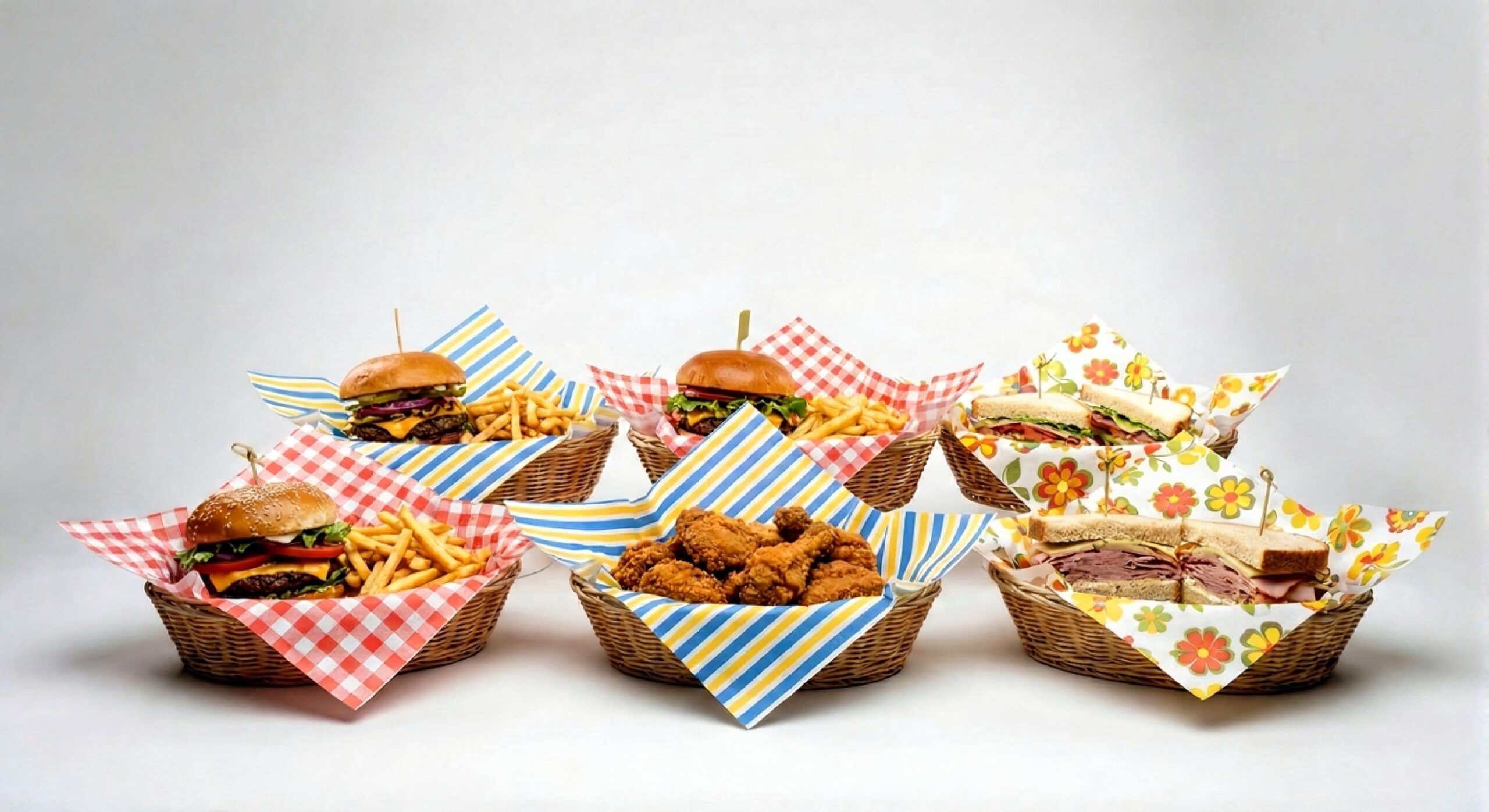
Liners are sheets or papers placed under food on trays, baskets, or plates. In fast-casual restaurants, staff use them as food liners to stop grease from reaching baskets or trays. Liners appear as tray liners, placemats, or sheets in shapes and sizes that match food. Liners come from greaseproof or food-safe paper that touches food directly. Liners cover surfaces and present food in order without plates. Types of liners include flat sheets, cones for wraps, or forms for fries. Some liners stay plain white or brown, while others carry printed patterns such as checkerboard designs or logos for branding. Liners absorb grease and moisture to keep food from sogginess and hold texture and appearance.
How Do Liners Improve Visual Appeal of Food?
Liners make fast-casual food appear attractive. Food served in baskets or trays with paper looks appetizing. Color or pattern on liner creates contrast and shows food colors. This matters for burgers or fries, where liner adds to look. Liner frames food without changing the food. Liners keep serving areas neat and consistent. Fast-casual restaurants use communal tables or counters for trays. Liners maintain cleanliness and order, which affects customer experience. Audiences who take pictures of food for social media benefit from liners that support sharing and promotion of restaurants.
What Are Hygiene Benefits of Using Liners?
Restaurants use liners for hygiene. Liners form a barrier between food and basket or tray to cut contact with germs and stop cross-contamination. Fast-casual settings serve food fast with high turnover. Liners limit touch with surfaces that customers use, which supports cleanliness and safety. Liners speed cleanup. Staff remove liner with crumbs and grease and discard liner, which cuts time on wiping trays or baskets. This shortens table turnarounds and keeps areas ready for customers. Liners cushion dishes and trays to lower noise and enhance atmosphere.
How Do Liners Contribute to Practical Efficiency?
Liners provide benefits beyond hygiene and presentation. Fast-casual restaurants handle customer volume during peak times. Liners simplify work by speeding cleanup and cutting the need for scrubbing or washing baskets and trays. Staff spend less time on tasks and focus on service. Liners come in standard sizes from greaseproof materials that resist heat and moisture. Liners protect tables and trays from damage and lower costs for furniture and equipment. Disposable features allow service models that need fast turnover and low downtime.
How Do Liners Help Build Brand Identity?
Custom liners allow fast-casual restaurants to show brand image. Printed liners display logos, slogans, or colors to help recognition with each food. Custom liners act like disposable tablecloths that share restaurant story past food. Liners share promotions, seasonal themes, or reliability messages to connect with customers. Visual layer improves experience and differs from competitors. Restaurants in Canada adopt liners for practical usage and marketing.
What Are Some Tips for Using Liners Effectively?
Restaurants assess dining and serving setup to use liners well. Size and material must match food quantity and type. Liners dispose easily and work with recycling or composting if present. Businesses add custom liners step by step, from baskets for fries or sandwiches to tray liners or placemats. Tests of print designs and customer feedback refine choices for brand visibility and satisfaction. Businesses combine liners with kiosk ordering and digital menus for dining flow.
Where Can Fast-Casual Businesses Get Quality Custom Liners?
Restaurants, food trucks, and startups source liners from suppliers like WaxPapersHub, which provides custom wrapping for fast-casual needs. Suppliers provide printed custom basket liners for cafes in materials and sizes. Prints of logos, colors, and messages build professional look for brands. WaxPapersHub knows fast-casual in Canada with food-safe inks and materials that meet rules. Orders start low, so startups access custom liners without large cost. Businesses enhance appeal with liners from such sources
How Can Liners Impact Customer Experience in Fast-Casual Dining?
Liners keep space clean and appealing for customers. Detail affects the view of cleanliness and care. Neat presentation makes customers comfortable with food. Liner frames food and boosts satisfaction. Liners cut mess and spills for comfort in communal seating of fast-casual dining. Paper texture adds sense without notice. Diners who share food on social media see a linear effect on views and recommendations. Youth expect brands to show efforts in ecology. Eco-friendly liners shows care for environment, which builds loyalty. Providers like WaxPapersHub supply eco-friendly liners that meet goals without loss in quality or look.
What Is the Future Outlook for Liners in Fast-Casual Restaurants?
Liners stay part of fast-casual dining because liners combine usage and design. Fast casual grows, so the need for liners increase. Changes in materials, printing, and eco-friendly options allow more liners that are safe for environment. Greaseproof wax paper sheets custom Liners may add digital parts like QR codes for menus or promotions. Digital parts join physical presentation with digital use. Customers want customization, branding, and reliability, so liners adapt for restaurant growth.
Conclusion
Liners serve as a tool that adds to fast-casual dining success. Liners improve visual appeal, hygiene, efficiency, and brand identity to support busy spots where details matter. Liners protect tables and create food for photos. Fast-casual restaurants meet customer needs with quality, eco, and custom liners. Businesses work with suppliers like WaxPapersHub for liners that allow needs. In Canada, or elsewhere, liners support fresh, memorable dining.